

Starting a Coffee Shop: How to Turn a Dream Into a Real Business (Even If You Start Small)
If you spend even a few minutes scrolling through “dream business” content, one idea comes up again and again:
Starting a coffee shop.
There’s something about it that draws people in—the atmosphere, the creativity, the sense of community. It feels like more than a business. It feels like a lifestyle.
But for many, it stays a dream because opening a full café can feel expensive, complicated, and out of reach.
The truth is, it doesn’t have to start that way.
You can build a coffee business in smaller, more manageable steps—and still create something meaningful.
Why Starting a Coffee Shop Is Such a Common Dream
Coffee shops combine several things people are naturally drawn to:
Creativity (branding, menu, space design)
Routine (daily customers, familiar rhythm)
Community (a place people gather)
Simplicity (a focused product with room to grow)
It’s one of the few businesses that blends lifestyle, income, and creativity—which is why it resonates with so many people.
The Reality: What Holds People Back
While the idea is appealing, traditional coffee shops come with real barriers:
High startup costs (often $80,000–$300,000+)
Long leases and buildouts
Equipment expenses
Staffing and overhead
That’s why many people stop before they start.
How to Start a Coffee Shop Without Starting Big
Instead of jumping straight into a full café, you can start with a smaller model that:
Requires less upfront money
Lets you test your idea
Builds experience and confidence
Smaller ways to start:
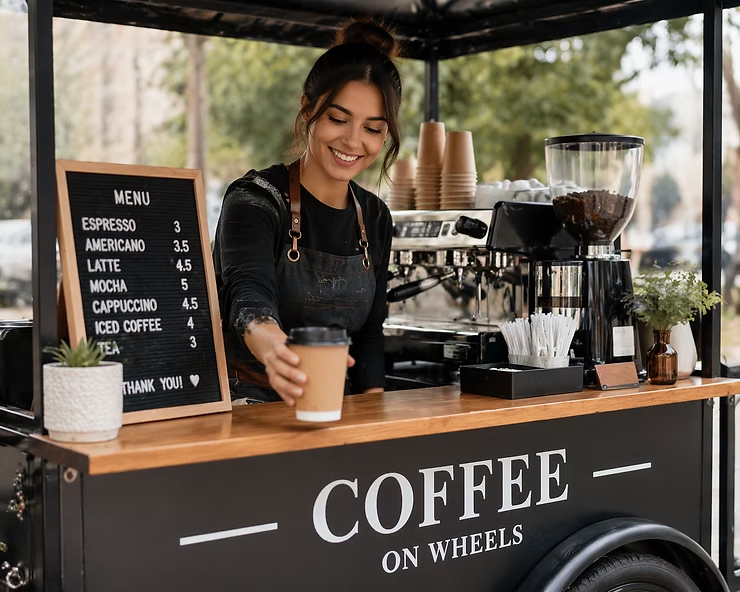
1. Coffee Cart
A coffee cart is one of the simplest entry points.
Mobile setup
Lower equipment costs
Ideal for events, markets, and pop-ups
2. Coffee Truck
A coffee truck gives you more flexibility and visibility.
Ability to move between locations
Serve different audiences
Expand menu options
3. Pop-Up Coffee Stand
Pop-ups allow you to:
Partner with local businesses
Test demand in real locations
Build brand awareness
Coffee Business Startup Comparison
Business Type | Startup Cost | Mobility | Best For | Profit Potential | Complexity Level |
Coffee Cart | $2,000–$10,000 | High | Beginners, events, markets | Medium | Low |
Coffee Truck | $10,000–$50,000 | High | Expanding reach, multiple locations | Medium–High | Medium |
Pop-Up Stand | $500–$5,000 | Medium | Testing ideas, partnerships | Medium | Low |
Full Coffee Shop | $80,000–$300,000+ | None | Long-term business | High | High |
What You Actually Need to Get Started
Even at a smaller scale, there are a few essentials:
Equipment:
Espresso machine or alternative brewing setup
Grinder
Milk frothing tools
Cups and supplies
Setup:
Cart, trailer, or small stand
Storage and transport solutions
Business basics:
Permits and local licenses
Food safety compliance
Payment system (like Square or similar tools)
Food Licenses, Permits, and Insurance You May Need
Before you start serving coffee—even with a small setup—it’s important to understand the basic requirements. These can vary by state and city, but most coffee businesses will need some combination of the following:
Common licenses and permits:
Business license
Food service license or permit
Health department permit
Mobile vendor permit
Temporary event permits
Some states also have cottage food laws, but these typically apply to baked goods—not beverages—so coffee businesses usually require full food service approval.
Insurance to consider:
General liability insurance
Product liability insurance
Commercial auto insurance (for trucks)
Equipment insurance
Getting these in place early helps protect both you and your business as you grow.
Where to Park Your Coffee Cart or Truck (And How to Find the Best Locations)
Location can make or break a mobile coffee business.
Unlike a traditional café, your success often depends on where and when you set up.
Things to know before you park:
Many cities restrict where mobile vendors can operate
You may need permission for private property (like office lots or events)
Some areas require specific vendor zones or permits
Always check local regulations before choosing a location.
How to find high-performing locations:
1. Look for built-in foot traffic
Train stations
Downtown areas
Business districts
Parks and walking trails
2. Think about timing
Morning traffic is key for coffee.
Good opportunities include:
Commuter routes
Office buildings
Weekend markets
3. Partner with local businesses
Set up outside:
Gyms
Boutiques
Offices
Event spaces
This creates a consistent customer base.
4. Test multiple locations
Don’t assume your first spot is the best.
Try different locations and track:
Sales
Busy times
Customer patterns
Why location matters so much
A great product helps—but the right location brings the customers.
Testing and adjusting your setup is one of the fastest ways to improve your results.
Best Locations for a Coffee Cart or Truck
Location Type | Why It Works | Best Time of Day | Difficulty to Secure | Notes |
Business Districts | High commuter traffic | Morning | Medium | Great for repeat customers |
Train Stations | Consistent foot traffic | Early morning | High | May require permits |
Farmers Markets | Built-in audience | Morning–early afternoon | Low–Medium | Good for testing |
Parks & Trails | Casual foot traffic | Morning–midday | Low | Seasonal demand |
Gyms & Fitness Studios | Health-focused customers | Early morning | Low | Strong partnership opportunity |
Events & Festivals | High volume | Varies | Medium | Great for quick revenue spikes |
How Much Does It Cost to Start Small?
Here’s a realistic range:
Option | Estimated Cost |
Coffee Cart | $2,000–$10,000 |
Coffee Truck | $10,000–$50,000 |
Pop-Up Setup | $500–$5,000 |
Starting smaller gives you flexibility and reduces risk.
How to Build Your Coffee Business Step by Step
Step 1: Start with a simple menu
Focus on a few drinks and do them well.
Step 2: Test your idea
Farmers markets, events, and pop-ups are ideal for early testing.
Step 3: Build a recognizable brand
Your name, aesthetic, and customer experience matter more than perfection.
Step 4: Save and reinvest
Use early profits to grow.
If you’re not sure how to fund your start, this guide on saving money to start a business walks through a simple, realistic way to build your business fund step by step.
Step 5: Grow intentionally
If you decide to open a full café later, you’ll already have:
Experience
Customers
A proven concept
What Makes a Coffee Business Successful
Beyond the drinks, success often comes down to:
Consistency
Customer experience
Atmosphere (even in a small setup)
Branding and storytelling
People don’t just buy coffee—they return for how it feels.
Another Idea From This Series: Selling Baked Goods
If you’re drawn to the idea of food-based businesses but want something even simpler to start, selling baked goods can be a great entry point.
Many people begin with:
Home-based baking (where allowed)
Farmers markets
Small event orders
You can explore last week’s idea on selling baked goods to see how it compares and which direction might fit you best.
Final Thoughts
Starting a coffee shop can feel like a big leap—but it doesn’t have to be.
You can start smaller, learn as you go, and build something that grows over time.
What begins as a simple setup can turn into something much bigger—because you took the first step.
Startup Budget Breakdown (Small Coffee Setup)
Expense Category | Estimated Cost |
Espresso Machine | $500–$3,000 |
Grinder | $100–$800 |
Cart or Setup | $500–$5,000 |
Permits & Licenses | $100–$1,000 |
Supplies (cups, beans, milk) | $200–$500 |
Insurance | $100–$500 annually |
FAQ: Starting a Coffee Shop
Can you start a coffee business with little money?
Yes. Coffee carts and pop-ups allow you to start with lower costs and scale over time.
Do you need experience to start a coffee shop?
Not necessarily, but learning basic coffee-making skills will help.
Is a coffee cart profitable?
It can be, especially with low overhead and strong location choice.
What’s the easiest way to start?
A pop-up or coffee cart is typically the simplest starting point.



Comments