

How to Validate a Wedding Business Idea Before You Spend Money
Choosing a wedding business idea can feel exciting.
You may already be picturing the website, buying supplies, creating packages, and deciding what your first customers will receive.
But before you spend hundreds or thousands of dollars on inventory, equipment, branding, or marketing, it makes sense to answer one important question:
Is there enough evidence that people may actually pay for this idea?
That is where validation comes in.
Validating a wedding business idea does not mean proving that your business will definitely succeed. No research can guarantee that.
Instead, validation helps you gather evidence before making a larger financial commitment.
You are looking for signs that:
Couples are already paying for similar products or services.
There may be room for another provider in your market.
You can realistically deliver what you are offering.
Your pricing has the potential to cover your costs and leave room for profit.
You can test the idea without immediately building the full version of the business.
If you are still deciding what type of wedding business you want to start, begin with Wedding Rental and Service Business Ideas for realistic options across rentals, services, digital products, and other wedding-related businesses.
Once you have narrowed your list, use How to Choose a Wedding Business Idea: 10 Questions to Help You Decide before moving into the validation process below.

What Does It Mean to Validate a Wedding Business Idea?
Validation simply means looking for real-world evidence that supports your idea.
Suppose you want to start a champagne wall rental business.
You could immediately buy:
A champagne wall
Glassware
Storage containers
A delivery vehicle or trailer
Decorations
Signage
A website
Business cards
Or you could first investigate whether local couples are actually renting champagne walls, what competitors charge, what venues allow, and whether you can realistically deliver and set one up.
The second approach gives you more information before you invest.
The goal is not to eliminate every possible risk.
The goal is to avoid spending a large amount of money based entirely on an assumption.
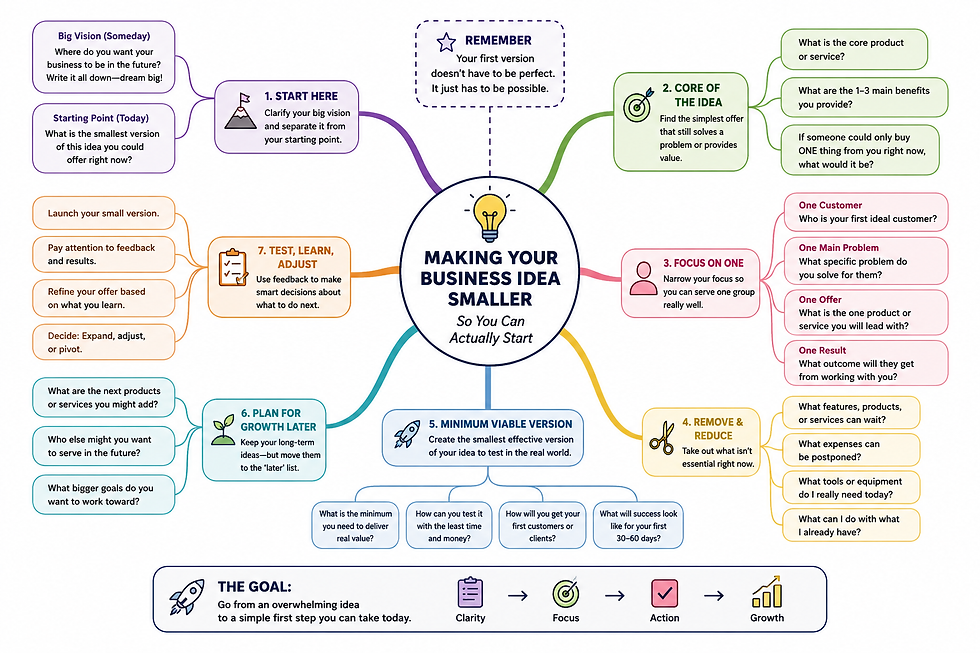
Step 1: Define the Smallest Version of Your Idea
One of the biggest mistakes you can make when starting a wedding business is thinking you need to launch the complete version immediately.
Instead, ask:
What is the smallest version someone could realistically pay me for?
For example:
Big Business Idea | Smaller Version to Test |
Full wedding décor company | One backdrop or ceremony décor package |
Large wedding rental company | One high-demand rental category |
Full-service wedding planner | Day-of coordination or planning consultations |
Mobile bridal beauty business | One clearly defined bridal service |
Wedding signage company | Welcome signs and seating charts |
Wedding content creator | One 4-hour content package |
Luxury picnic wedding service | Proposal or bridal-shower packages first |
Wedding favor company | One or two favor styles |
Wedding printables business | One coordinated printable wedding collection |
Floral business | Small event arrangements or bridal shower packages |
Starting smaller gives you the opportunity to learn before you expand.
You can add more products, rentals, or services after customers begin showing you what they actually want.
Step 2: Look at What Couples Are Already Paying For
You do not need to invent a completely new wedding concept.
In fact, seeing competitors can be useful.
Competition can be evidence that customers already spend money on that type of service.
Search for businesses offering your idea in your local area.
Look at:
Wedding vendor directories
Google search results
Instagram
Facebook wedding groups
Pinterest
Venue vendor lists
Wedding planners' websites
Local bridal shows
Local wedding publications
Pay attention to what businesses actually offer.
For example:
What packages do they have?
What appears to be their main service?
What do they charge, if pricing is public?
How far do they travel?
Are they booking weddings regularly?
What types of weddings do they appear to serve?
What do customers mention in reviews?
You are not trying to copy competitors.
You are trying to understand the existing market.
Step 3: Search for Signs of Customer Demand
Competitors are only one piece of the puzzle.
You can also look for what couples are actively asking about.
Browse local wedding groups and community groups.
Look for questions such as:
Does anyone rent champagne walls?
Who offers day-of wedding coordination?
Can anyone recommend a wedding content creator?
Who rents arches?
Does anyone make custom wedding signs?
Who can set up a dessert table?
Does anyone provide childcare at weddings?
Can someone help with wedding pets?
Who rents linens?
Does anyone provide late-night wedding snacks?
Save or write down repeated questions.
You do not need hundreds of people asking for the exact same thing.
You are simply looking for evidence that the problem or need exists.
Step 4: Identify What Customers Complain About
Sometimes the best validation comes from problems customers already have.
Read reviews for businesses similar to the one you are considering.
Look for repeated complaints.
Examples might include:
Difficult communication
Slow response times
Limited delivery area
Complicated pricing
Surprise fees
Limited style options
Minimum order requirements
Poor setup instructions
Lack of customization
No pickup option
No last-minute availability
A repeated complaint can sometimes reveal an opportunity.
For example:
If couples repeatedly complain that local rental companies require large minimum orders, perhaps your business could specialize in small wedding rentals.
If customers struggle to find someone willing to handle setup and breakdown, perhaps that could become part of your package.
You do not always have to create something completely new.
Sometimes the opportunity is simply to provide an existing service in a more convenient way.
Step 5: Talk to People Who Actually Buy Wedding Services
Research is helpful, but direct conversations can be even more useful.
Talk to people who recently planned a wedding or are currently engaged.
You might ask:
What was surprisingly hard to find?
What services did you wish existed locally?
What did you spend more money on than expected?
What services did you consider but decide not to purchase?
Was there anything you wanted but could not find?
What made you choose one vendor over another?
Which wedding expenses felt worthwhile?
Which felt overpriced?
Avoid asking:
“Would you buy this?”
People often say yes to ideas when no actual purchase is required.
Instead, ask about what they have already done, purchased, searched for, or struggled with.
Past behavior usually gives you more useful information than hypothetical enthusiasm.
Step 6: Talk to Wedding Professionals
Wedding vendors may see patterns that couples themselves do not notice.
Consider talking with:
Wedding planners
Venue coordinators
Photographers
Caterers
DJs
Florists
Rental companies
Bridal shops
You do not need to ask them to reveal confidential business information.
Instead, ask broader questions.
For example:
What do couples frequently ask for?
Are there services that are difficult to find locally?
What types of vendors do couples often need at the last minute?
Are there services you regularly refer out?
Are there rental items venues do not provide?
A venue coordinator may tell you that couples frequently ask about audio guest books.
A planner might mention difficulty finding reliable wedding pet attendants.
A photographer may tell you couples increasingly want behind-the-scenes phone content.
One conversation can sometimes uncover an angle worth investigating further.
Step 7: Check Whether the Business Makes Sense Financially
Demand alone does not make a business viable.
You also need to understand what it costs to provide the service.
Create a basic cost estimate.
Include:
Equipment
Inventory
Supplies
Packaging
Transportation
Gas
Delivery
Setup
Breakdown
Cleaning
Storage
Insurance
Software
Website
Payment processing fees
Replacement or repair costs
Marketing
Then estimate what you could realistically charge.
The difference between what customers are willing to pay and what it costs you to provide the service matters more than how exciting the idea sounds.
A business can be popular and still be difficult to make profitable.
Step 8: Do Not Forget Storage and Transportation
This is especially important for wedding rental businesses.
A rental idea may look inexpensive until you start thinking about where everything will go.
Before buying inventory, ask:
Where will I store this?
Can I safely transport it?
Will it fit in my current vehicle?
How heavy is it?
Can one person set it up?
How long will setup take?
How will it be cleaned?
How easily can it be damaged?
What happens if a customer breaks it?
For example, one wedding arch may fit easily into a garage.
Twenty arches, walls, pedestals, tables, and décor pieces are a completely different business.
Storage should be part of validation, not something you figure out later.
Step 9: Test the Idea Before Building the Full Business
Once you see signs of demand, find a low-cost way to test the concept.
The test will depend on your business.
If You Want to Start a Rental Business
You might purchase or create only one rental item.
Photograph it well.
Create a simple rental package.
Then see whether you can generate inquiries before purchasing more inventory.
If You Want to Offer a Wedding Service
Create one clearly defined package.
For example:
Wedding Content Creator Starter Package
4 hours of coverage
Vertical phone video clips
Short highlight reel
Delivery within a defined timeframe
Try to sell that one offer before designing five different packages.
If You Want to Sell Digital Wedding Products
Create one complete collection.
For example:
Invitation
Welcome sign
Table numbers
Seating chart template
Favor tags
See whether customers respond before creating 20 different wedding themes.
Step 10: Try to Get a Real Customer
One of the strongest forms of validation is someone actually paying.
That does not mean you need hundreds of sales.
Your first goal may simply be:
Can I get one customer to pay for this?
Then:
Can I get five?
Then:
Can I get ten?
Each sale teaches you something.
You may discover that customers:
Want a different package.
Ask for an item you did not plan to offer.
Care about delivery more than customization.
Prefer bundles.
Want pickup options.
Need different pricing.
Book farther in advance than expected.
Let actual customer behavior shape the business.
Step 11: Consider a Paid Trial Instead of Working for Free
You may be tempted to provide your first service completely free in exchange for photos.
Sometimes a strategic portfolio project can make sense, but do not assume free work is the only way to test demand.
You can also offer:
An introductory package
A limited launch price
A small starter package
A discounted first-event rate
Even a modest paid booking gives you better validation than dozens of people telling you an idea sounds great.
Someone paying means they valued the service enough to spend money on it.
Step 12: Test Your Marketing Message
Sometimes the problem is not the business idea.
It is how the business is described.
Suppose you advertise:
Luxury Event Styling
People may not immediately understand what they receive.
Compare that with:
Wedding Ceremony Setup and Décor Packages
or:
Wedding Backdrop Rental With Delivery and Setup
The second version makes the offer easier to understand.
During validation, experiment with:
Service names
Package descriptions
Photos
Pricing presentation
Social posts
Landing page headlines
Pay attention to which version gets more questions or inquiries.
Step 13: Know the Difference Between Interest and Validation
This distinction is important.
Someone saying:
“That's such a cute idea!”
is not validation.
Someone liking your Instagram post is not validation.
Someone saving your Pinterest pin is not necessarily validation.
Stronger signals include:
Asking about availability
Asking about price
Joining a waitlist
Requesting a quote
Leaving a deposit
Purchasing
Referring someone
Booking a consultation
The closer the action is to an actual purchase, the stronger the evidence.
A Simple Wedding Business Validation Scorecard
Use this table before deciding whether to invest more money.
Validation Question | Yes | Not Yet |
Can I clearly explain what I am selling? | ☐ | ☐ |
Can I identify the type of couple likely to buy it? | ☐ | ☐ |
Are similar businesses already getting customers? | ☐ | ☐ |
Have I found evidence that couples are asking for this? | ☐ | ☐ |
Have I researched local competitors? | ☐ | ☐ |
Have I estimated startup costs? | ☐ | ☐ |
Have I estimated delivery or service costs? | ☐ | ☐ |
Do I know where inventory will be stored? | ☐ | ☐ |
Can I test the idea with a smaller offer? | ☐ | ☐ |
Have I spoken with potential customers or wedding vendors? | ☐ | ☐ |
Could I realistically charge enough to make the idea worthwhile? | ☐ | ☐ |
Have I received a real inquiry, quote request, deposit, or sale? | ☐ | ☐ |
You do not need every box checked before starting.
But the more evidence you gather, the less you are relying on guesswork.
How Much Should You Spend While Validating?
There is no universal amount.
A wedding planner may be able to validate a service with very little equipment.
A photo booth company will require more upfront investment.
A rental business may fall somewhere in between.
A useful rule is:
Spend enough to test the idea, not enough to build the entire business.
If the smallest viable version costs $200, test that before spending $5,000.
If you eventually need startup money, you can begin building your own fund with a
You can also explore Grants for 2026 to learn about current grant opportunities and resources that may be available to some entrepreneurs. Grants should generally be treated as one possible funding source rather than something your launch depends on.
Red Flags That May Mean You Should Rethink the Idea
Validation can also reveal when an idea needs to change.
Watch for signs such as:
Almost no evidence of local demand
Extremely low prices from competitors
High equipment costs
Difficult transportation
Expensive storage
High insurance requirements
Customers showing interest but refusing the necessary price
A market that appears heavily oversupplied
A service that requires skills or certifications you do not currently have
A business model you do not actually want to operate
None of these automatically means you should abandon the idea.
Sometimes you simply need to make it smaller or choose a different angle.
What If There Are Already Lots of Competitors?
Competition does not automatically mean you should avoid the idea.
Ask a better question:
Is there a reason someone would choose my version?
Perhaps you offer:
Smaller packages
Faster setup
Different aesthetics
Better communication
More customization
Pickup options
Delivery to underserved areas
Packages for smaller weddings
More transparent pricing
An unusual specialty
The difference does not need to be revolutionary.
It simply needs to matter to the customer.
What If There Are No Competitors?
This can mean two very different things.
You may have discovered an underserved opportunity.
Or there may be little demand.
Do not automatically assume being first is a good sign.
If nobody offers the service locally, spend extra time talking to couples, venues, and wedding professionals before investing heavily.
You want to understand whether the gap exists because nobody has filled it—or because customers are not looking for it.
Validation Does Not Have to Take Months
You can gather meaningful information fairly quickly.
For example:
Week 1
Research competitors and local wedding vendors.
Week 2
Talk to potential customers and wedding professionals.
Week 3
Calculate costs and create the smallest version of your offer.
Week 4
Begin testing your package or product.
The purpose is not endless research.
Eventually, you need to put something in front of customers.
What Comes After Validation?
Once you begin seeing real evidence of demand, you can make more confident decisions about:
Branding
Equipment
Inventory
Website
Pricing
Packages
Marketing
Funding
This is when it becomes safer to gradually invest more.
You may also decide to return to Wedding Rental and Service Business Ideas and compare your validated concept with other possibilities.
If you are still between two or three options, revisit How to Choose a Wedding Business Idea: 10 Questions to Help You Decide before making a larger commitment.
You Do Not Need Perfect Proof Before You Start
Validation is not about eliminating uncertainty.
Starting any business involves some uncertainty.
The purpose is to replace:
“I think people might buy this.”
with something closer to:
“I found people already paying for this, I understand what competitors offer, I know approximately what it costs me to provide, and I have a realistic way to test it.”
That is a much stronger place to start.
So before you order 30 rental pieces, buy expensive equipment, or spend heavily on branding, test the smallest practical version first.
Research.
Ask questions.
Run the numbers.
Put the offer in front of real customers.
Then allow the response you receive to determine what you build next.
Frequently Asked Questions
How do I know if my wedding business idea is good?
Look for evidence that customers already pay for similar products or services, research competitors, estimate your costs, talk to potential customers, and test a small version before making a large investment.
Do I need competitors for a business idea to be valid?
No, but competitors can be useful evidence of existing demand. If you find no competition, investigate whether the market is underserved or whether there simply is not much customer demand.
Should I buy inventory before validating a wedding rental business?
Consider starting with the smallest amount of inventory needed to test demand rather than purchasing a large collection immediately.
What is the strongest way to validate a business idea?
A real purchase, deposit, booking, or serious quote request is generally stronger evidence than likes, comments, or people simply saying they like the idea.
Can I validate a wedding business without spending much money?
Often, yes. Service businesses and digital businesses may be especially inexpensive to test. Rental businesses usually require some upfront spending, but you can still begin with a small amount of inventory.
What if I need money to start the business after validation?
Once you have evidence that the idea is worth pursuing, you can explore funding options. A Savings Challenge to Save Money for a Business can help you build your own startup fund gradually, while Grants for 2026 can help you explore grant programs that may apply to certain businesses or entrepreneurs.


Comments