

Keep Your Hands Busy and Make Money: 25 Hobbies You Can Turn Into Extra Income
Sometimes you want a hobby because you need something to do with your hands.
You want to knit while watching TV.
Make candles on a Sunday afternoon.
Work with clay.
String beads.
Paint furniture.
Bake something from scratch.
And sometimes, after doing that hobby for a while, another thought starts creeping in:
Could I make money doing this?
Maybe.
Not every hobby needs to become a business. In fact, there is something valuable about having hobbies that stay completely separate from work.
But if you already enjoy making something with your hands, there may be a way to turn that activity into a small source of extra income without immediately trying to build an entire company around it.
You do not have to open a huge online shop.
You do not need 50 products.
You do not need a logo before you have made your first sale.
Sometimes you simply need one thing you enjoy making and one person willing to pay for it.
Here are 25 hands-busy hobbies that have the potential to become extra income.

Hands-Busy Hobbies That Can Potentially Make Money
Hobby | What You Could Sell | Simple Way to Start |
Crochet | Scarves, blankets, pet items | Make one repeatable item |
Knitting | Hats, scarves, baby items | Offer seasonal pieces |
Jewelry making | Earrings, bracelets, charms | Create a small collection |
Candle making | Candles, gift sets | Test 2–3 scents |
Soap making | Bars, gift sets | Start with a simple product line |
Embroidery | Hoops, clothing, pet portraits | Offer personalized pieces |
Sewing | Bags, pet bandanas, pillows | Choose one easy item |
Quilting | Small quilts, memory pieces | Start with smaller projects |
Macramé | Plant hangers, wall décor | Make a few core designs |
Needle felting | Animals, ornaments, portraits | Offer custom pieces |
Pottery | Mugs, bowls, trays | Sell small functional pieces |
Polymer clay | Earrings, charms, ornaments | Create themed collections |
Woodworking | Shelves, signs, boxes | Focus on small projects |
Furniture flipping | Tables, chairs, décor | Flip one piece at a time |
Wreath making | Seasonal wreaths | Sell locally first |
Flower arranging | Bouquets, centerpieces | Start with small events |
Cricut crafting | Signs, decals, party items | Pick one niche |
Paper crafting | Cards, invitations, décor | Sell themed sets |
Bookbinding | Journals, notebooks | Make simple handmade journals |
Baking | Cookies, breads, cakes | Start with one specialty |
Candy making | Fudge, chocolates, treats | Offer seasonal boxes |
Gardening | Plants, herbs, seedlings | Sell locally |
Terrarium making | Mini gardens, plant gifts | Create gift-ready designs |
Painting | Signs, portraits, décor | Offer one recognizable style |
Upcycling | Refinished décor and accessories | Transform thrifted finds |
1. Crochet
Crochet is one of the most obvious hobbies for people who like to keep their hands busy.
Once you know a few stitches, there are endless directions you can go.
You could make:
Scarves
Hats
Blankets
Tote bags
Baby items
Pet sweaters
Stuffed animals
Home décor
The biggest mistake would be trying to make everything.
Instead, choose one product you can make repeatedly.
Maybe you become the person who makes chunky dog scarves.
Or oversized winter hats.
Or neutral baby blankets.
A narrow product line is much easier to test than a shop filled with completely unrelated crochet pieces.
2. Knitting
Knitting works especially well for someone who likes repetitive movement.
Many people can knit while:
Watching television
Listening to podcasts
Traveling
Sitting at appointments
Relaxing in the evening
Possible products include hats, scarves, mittens, blankets, socks, and baby items.
You could also sell patterns if you eventually become skilled enough to create your own designs.
3. Jewelry Making
Jewelry making gives you plenty to do with your hands without requiring much space.
You can experiment with:
Beads
Wire
Charms
Clay
Crystals
Metal
Resin
Fabric
Instead of launching dozens of styles, consider creating a very specific collection.
For example:
Minimalist dog-lover jewelry
is easier to understand than:
Random jewelry I enjoy making.
A clear theme can make a hobby easier to turn into a small business.
4. Candle Making
Candle making combines hands-on work with fragrance, color, and visual design.
You could experiment with:
Seasonal candles
Gift candles
Memorial candles
Humor
Destination-inspired scents
Book-inspired themes
Relaxation candles
Start with two or three scents instead of buying supplies for 20.
The goal is to test whether anyone actually wants what you are making before investing heavily in inventory.
5. Soap Making
Soap making can become both a creative hobby and a giftable product.
You might build collections around:
Seasons
Herbs
Florals
Spa themes
Gift sets
If you eventually sell skincare or bath products, pay close attention to labeling requirements and any rules that apply where you live.
6. Embroidery
Embroidery has a very different feel from mass-produced décor because each piece can look handmade and personal.
Possible products include:
Personalized hoops
Pet portraits
Clothing
Tote bags
Baby items
Wedding gifts
Memorial pieces
Custom work can sometimes command higher prices, but it also takes more communication and time.
You may prefer to create a small selection of repeatable designs instead.
7. Sewing
If you enjoy fabric, sewing can open the door to dozens of product ideas.
You could make:
Tote bags
Cosmetic bags
Pillow covers
Table runners
Dog bandanas
Aprons
Fabric baskets
Simple clothing
Try choosing something you can make relatively quickly and consistently.
A product does not have to be complicated to sell.
8. Quilting
Full-size quilts can take enormous amounts of time.
That does not mean quilting cannot become income.
You might start smaller with:
Baby quilts
Table runners
Wall hangings
Memory pillows
Quilted bags
Christmas stockings
Smaller pieces may allow you to sell your work without spending weeks on every order.
9. Macramé
Macramé is inexpensive to begin compared with many other crafts.
You could create:
Plant hangers
Keychains
Wall décor
Coasters
Ornaments
Wedding décor
Because the materials are relatively simple, design and presentation become especially important.
10. Needle Felting
Needle felting is one of those hobbies that can start as something you do simply to keep your hands occupied and gradually become highly specialized.
Popular possibilities include:
Miniature animals
Ornaments
Pet portraits
Seasonal decorations
Small collectibles
Custom pet pieces can be especially meaningful because customers may be looking for something that resembles a specific animal.
11. Pottery
Pottery gives you a chance to make objects people can actually use.
You could create:
Mugs
Bowls
Spoon rests
Planters
Trinket dishes
Candle vessels
Jewelry holders
If you have access to a local pottery studio, you may be able to begin without buying your own kiln or large amount of equipment.
12. Polymer Clay
Polymer clay works well for small products.
Think:
Earrings
Charms
Magnets
Ornaments
Keychains
Miniatures
You can also build collections around seasons, pets, hobbies, professions, or celebrations.
13. Woodworking
Woodworking does not have to mean making dining tables.
Small woodworking projects may be much easier to sell.
Try:
Shelves
Signs
Planters
Pet feeding stations
Key holders
Small stools
Keepsake boxes
Start with projects that use tools and materials you already own whenever possible.
14. Furniture Flipping
If you love sanding, painting, staining, and transforming old furniture, furniture flipping may be a better fit than making something from scratch.
Look for pieces with good structure that simply need cosmetic improvements.
Possible finds include:
Side tables
Small dressers
Nightstands
Benches
Chairs
Selling locally can eliminate the complicated shipping problem that comes with large pieces.
15. Wreath Making
Wreath making can work especially well as a seasonal side business.
You might create:
Fall wreaths
Christmas wreaths
Spring wreaths
Summer wreaths
Pet-themed wreaths
Wedding wreaths
Instead of making 30 before knowing whether anyone wants them, make a few examples and test demand first.
16. Flower Arranging
If you naturally rearrange grocery-store flowers as soon as you bring them home, flower arranging may be worth exploring.
Possible services or products include:
Birthday bouquets
Small event centerpieces
Bridal shower flowers
Holiday arrangements
Dried arrangements
You could start with small local projects rather than immediately trying to compete with established florists.
17. Cricut Crafting
A Cricut can become a hobby all by itself.
You can make:
Signs
Decals
Labels
Party decorations
Cake toppers
Personalized gifts
Shirts
Mugs
Cards
The trick is not making everything the machine is capable of making.
Choose a market.
For example:
Kid's birthday party décor
is a clearer direction than:
Personalized Cricut crafts.
18. Paper Crafting
People still buy physical paper products, particularly when the design or occasion feels special.
You might create:
Greeting cards
Invitations
Gift tags
Party décor
Scrapbook pieces
Journaling supplies
You could also eventually turn some physical designs into downloadable products, giving you another way to earn from the same creative work.
19. Bookbinding
If you enjoy journals, paper, and stationery, bookbinding can be an unusual hobby to explore.
You might create:
Handmade journals
Sketchbooks
Travel notebooks
Memory books
Guest books
Part of the appeal is that each piece can feel unique.
20. Baking
Baking can become extra income, but you need to understand the cottage food or food-business rules that apply where you live.
Depending on those rules, possibilities may include:
Cookies
Bread
Cupcakes
Cakes
Brownies
Specialty desserts
Instead of offering an enormous menu, consider becoming known for one thing.
Maybe it is decorated sugar cookies.
Maybe sourdough.
Maybe giant cookies.
Specific is often easier to market.
21. Candy or Chocolate Making
Homemade sweets can work well for gifts and seasonal sales.
You might make:
Fudge
Caramels
Chocolate bark
Truffles
Chocolate-covered treats
Holiday candy boxes
Again, verify food-sale requirements before selling anything edible.
22. Gardening and Plant Propagation
If your hands are happiest in soil, your hobby may have income potential too.
Depending on what is permitted locally, you might sell:
Seedlings
Herbs
Houseplants
Plant cuttings
Flower starts
Small planters
You can also expand beyond selling plants themselves and offer related products or workshops.
23. Terrarium Making
Terrariums combine plants, rocks, moss, glass, and miniature design.
They can make appealing:
Housewarming gifts
Office décor
Memorial pieces
Wedding favors
Holiday gifts
Start with a few designs rather than stocking dozens of glass containers before you know what people prefer.
24. Painting
You do not have to become a gallery artist to make money painting.
Potential products include:
House portraits
Signs
Abstract canvases
Ornaments
Small decorative pieces
A recognizable niche can make it easier for people to understand what you offer.
25. Upcycling and Repurposing
If your favorite part of thrifting is looking at something and immediately imagining what it could become, upcycling may be your hobby.
Turn older items into:
Home décor
Planters
Furniture
Storage pieces
Decorative trays
Wall art
Your raw materials may even cost less than starting a craft from scratch.
Which Hands-Busy Hobbies Are Easiest to Start?
The easiest hobby to monetize is usually not the one with the greatest theoretical profit.
It is the one you are actually willing to keep doing.
Before buying supplies, ask:
Do I already know how to do this?
Do I already own some of the supplies?
Can I make something people would realistically buy?
Can I make it more than once?
Can I price it high enough to cover my materials and time?
Can I ship it easily, or would I rather sell locally?
Do I still enjoy making it after the fifth one?
That last question matters.
Making one candle for yourself can be fun.
Making 40 identical candles for holiday orders may feel very different.
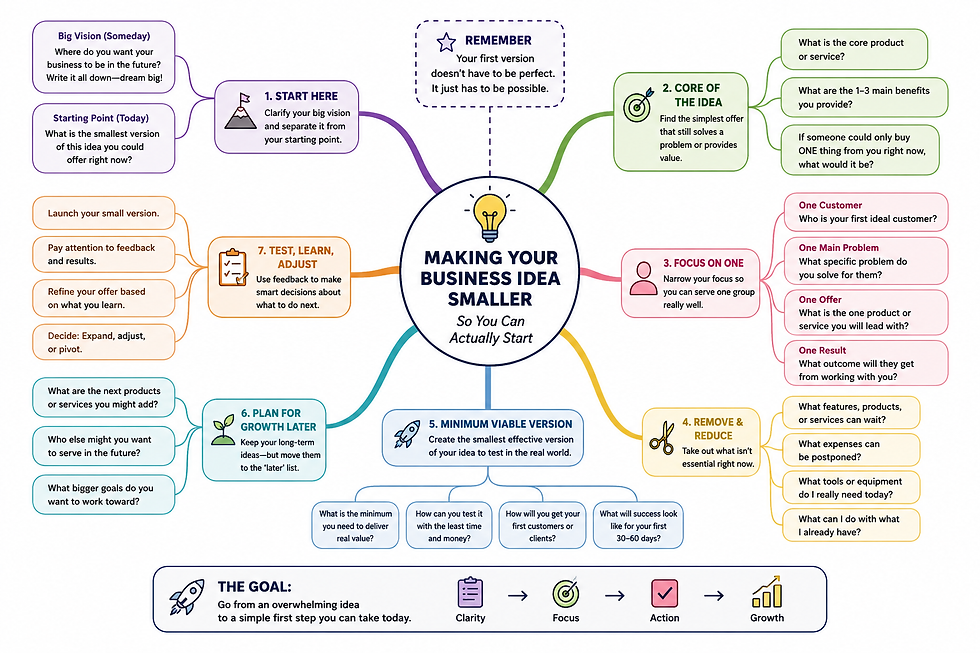
Start With One Product
One of the easiest ways to make a hobby feel overwhelming is to turn it into a giant business plan immediately.
You do not need:
20 products
Professional packaging
A full website
A huge social media presence
Hundreds of dollars in inventory
Start with one offer.
Instead of:
I want to start a crochet business.
Try:
I am going to make three chunky scarves and see whether anyone wants them.
Instead of:
I am launching a candle company.
Try:
I am going to create one candle in three scents and test them at a local event.
Instead of:
I want to sell Cricut products.
Try:
I am going to create one printable dog birthday party set.
Small tests give you information.
Huge launches give you expenses.
Look for the Overlap
A good hobby-based business often sits somewhere between three things:
What you enjoy making
What you can make reasonably well
What someone is willing to pay for
You need all three eventually.
If people want it but you hate making it, you may quickly resent your new side hustle.
If you love making it but nobody wants to buy it, it may be better kept as a hobby.
If people want it and you enjoy making it but it takes six hours to produce something you can only sell for $20, the numbers may not work.
The overlap matters.
Should You Sell Online or Locally?
You do not automatically need an online store.
Some hands-busy businesses actually make more sense locally.
Local selling may work particularly well for:
Furniture
Plants
Baked goods
Wreaths
Large décor
Flowers
Fragile pottery
Online selling may make more sense for:
Jewelry
Crochet
Embroidery
Paper goods
Clay pieces
Lightweight crafts
Digital versions of handmade designs
You can also combine both.
Test something locally before investing time into building an online shop.
Do Not Forget Your Time
One of the easiest mistakes hobby sellers make is pricing based only on materials.
If your yarn costs $12, that does not mean a handmade scarf should cost $15.
Your price may need to account for:
Materials
Packaging
Selling fees
Shipping supplies
Equipment
Mistakes and waste
Your time
You do not necessarily have to charge an hourly wage in a rigid way, but you do need to understand whether your product can realistically make money.
You Do Not Have to Turn Every Hobby Into a Business
There is a downside to monetizing something you love.
Once a hobby becomes a business, customers have deadlines.
They request changes.
They may want the same item again and again.
You may find yourself making the color that sells instead of the color you actually like.
That does not mean you should avoid making money from a hobby.
It just means it is worth protecting the parts you enjoy.
Maybe you sell five pieces a month instead of 50.
Maybe you only take custom orders during certain seasons.
Maybe you keep one creative hobby just for yourself.
There is no rule that says bigger is automatically better.
Your Hobby Might Be the Beginning of a Business Idea
Sometimes business ideas do not arrive because you sat down and tried to invent a business.
They start because you were already doing something.
You were knitting while watching television.
Making candles for friends.
Growing more plants than you had room for.
Refinishing a dresser.
Making dog bandanas.
Decorating cookies.
And eventually someone asked:
“Do you sell these?”
That question does not automatically mean you need to start a company.
But it might be worth exploring.
If you already have a hobby that keeps your hands busy, do not start by asking how to build an entire business around it.
Ask something much smaller:
What is one thing I could make and try to sell?
Make it.
Test it.
See what happens.
Your next income stream may begin with something you were already doing with your hands.


Comments